The Incentives Lab
Learn incentives. Solve them.

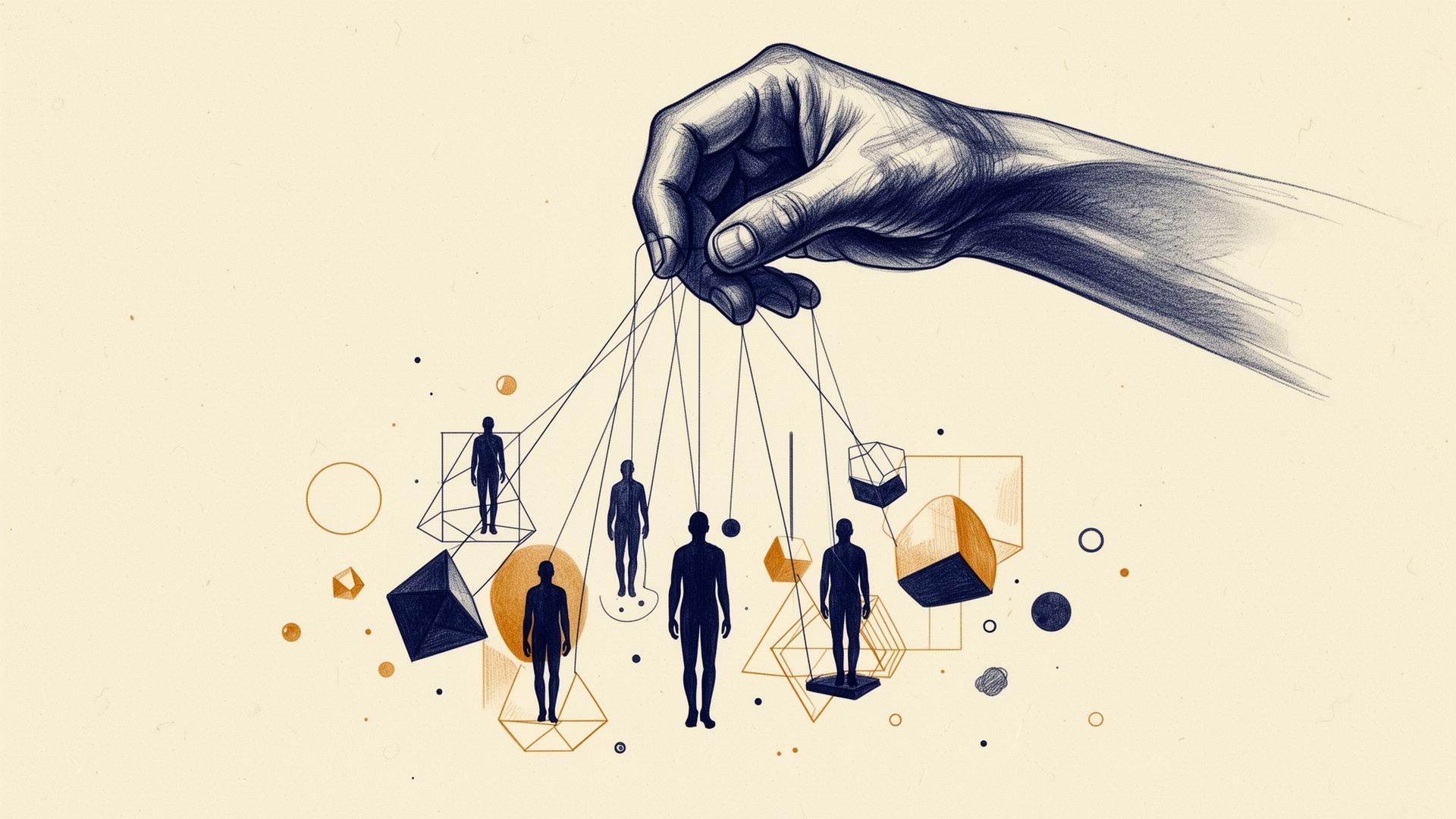
All problems are incentive problems.

"Show me the incentive and I'll show you the future."

A laboratory for learning incentives. A think tank for solving them.

Diagnose-Me-Now · 3 taps · ~20 sec

Where is the incentive misfiring?

Pick the closest situation.

The Incentives Lab Podcast

Episode One

Endorsement · Shark Tank

"Aaron Bare will 100x many companies."

Daymond John · Founder, FUBU · Shark Tank

The case strip

Three systems. Three incentive redesigns. Play with them.

A call center, an AI product team, and a school district. Same lesson: change what you reward and you change what happens next. This is what the Laboratory teaches and the Think Tank does at scale.

Example 01 — Read the incentive

A call center says it values 'customer happiness.' Watch what it actually rewards.

Flip the toggle. The metric moves. The behavior nobody asked for moves with it.

● Live
What gets measured
Calls handled per agent
088100
What quietly moves with it
Customers hung up on mid-issue
071100

You incentivized speed. You got abandonment dressed as throughput.

All problems are incentive problems. This is what that sentence means.

Example 02 — Design the tradeoff

An AI product team. How hard do you push 'engagement'?

Drag the slider. Every notch is a real tradeoff between attention captured today and trust spent tomorrow.

● Live
Reward depth (long sessions, fewer alerts)Reward engagement (every tap, every ping)
050100
Balanced

Engagement that survives a churn audit. Future = compounding trust.

Show me what you reward and I'll show you the product you'll ship in 18 months.

Example 03 — Pick the payoff

A school wants higher reading scores. Pick the lever.

Three real interventions. Each predictably shapes a different future. Pick one and read the cascade.

● Live

Pick a lever. There are no neutral ones — every incentive funds a behavior somewhere.

The premise

Every behavior you don't understand is an incentive you haven't found yet.

Your organization is perfectly designed to produce the behavior you are currently getting. If the metric can be gamed, it will be. The stated goal is rarely the real incentive. The Incentives Lab is the playground for finding the architecture underneath — and redesigning it.

Daily Behavior · One element a day

Kin Selection· Evolutionary Behavior

The behavioral element shaping decisions today. Read it, file it, come back tomorrow. Three days in a row turns a list into fluency.

Streak
0
days · longest 0
Start playing

Four ways in. No login required.

The atoms

The Periodic Table of Human Behavior™

Every behavior reduces to elements. Loss Aversion. Social Proof. Goodhart's Law. Status Quo Bias. Each tile gives you the plain-English definition, the Feynman explanation, the perverse-incentive risk, and a live experiment to run.

The compass

The 8 Universal Decision Motives™

Every decision moves toward something desirable or away from something painful. Map any product, behavior, or policy.

Safer
vs. vulnerable
Richer
vs. poorer
Healthier
vs. sicker
Smarter
vs. confused
Happier
vs. miserable
Connected
vs. lonely
Significant
vs. ignored
Free
vs. trapped
The lens

The Perverse Incentive Lens™

Drop in any system — a policy, a comp plan, an algorithm, a school, a hospital, a metric. The Lens shows you the gap between the stated goal and what's actually rewarded, scores the perverse-incentive risk, and proposes a redesign.

"If the metric can be gamed, it will be."

The living database

The Human Behavior Observatory™

A growing public archive of perverse incentives, behavioral molecules, case studies, and incentive redesigns — contributed by people who use the Lens in the wild. Browse what others have found. Submit your own.

The Think Tank

When the problem is real, hire the team that designs the redesign.

Diagnose and redesign a real incentive system inside a business, government, or institution. Sprints, audits, on-site sessions, and standing advisory for boards, F500s, AI labs, and governments.

We do not fix people. We redesign the systems shaping them.